The first racket does not need to make every shot powerful. It needs to help a new player hit the ball cleanly, keep the arm comfortable and enjoy enough sessions to learn. This guide narrows the choice to shape, weight, balance and face feel, then turns those variables into an easy shortlist.
The official rules of padel set a maximum overall racket length of 45.5 cm, a maximum width of 26 cm and a maximum thickness of 38 mm. Those dimensions do not tell a beginner what to buy, but they explain why the buyer should compare playing feel rather than chase a non-standard size. Read the International Padel Federation rules.
Which shape is easiest for a beginner?
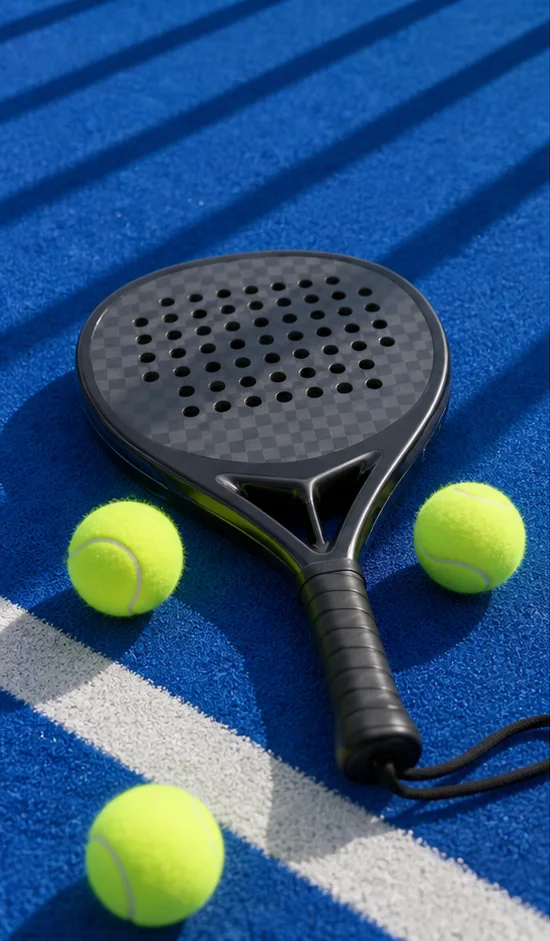
A round shape is usually the easiest first choice because its sweet spot is large and close to the centre of the face.
| Shape | Sweet-spot feel | Usual balance | Best fit |
|---|---|---|---|
| Round | Large and central | Low to medium | New players who value control and comfort |
| Teardrop | Medium and slightly higher | Medium | Players who already hit consistently and want a balanced feel |
| Diamond | Smaller and higher | Medium to high | Experienced players who can control a head-heavy racket |
A beginner can improve with any legal racket, but a round model gives more forgiving contact when the ball does not meet the centre perfectly. A teardrop can be a sensible next step once rallies are reliable. A diamond shape is not “wrong”; it simply asks more of the player’s timing and forearm.
What racket weight should a beginner choose?
Choose the lightest weight that still feels stable in your hand; comfort through a 60-minute session matters more than one hard overhead.
There is no single legal beginner weight. Different brands label weights differently, and balance changes how heavy a racket feels in motion. Instead of buying from a number alone, use a simple test:
- Hold the racket in a ready position for 30 seconds.
- Make ten slow forehand and backhand swings.
- Make five overhead preparation movements.
- Notice whether your wrist, elbow or shoulder starts to tighten.
If it already feels tiring in the shop, it will feel heavier late in a match. Players with a history of elbow or shoulder pain should ask a coach or clinician before selecting a heavier or head-heavy racket.
Does balance matter as much as total weight?
Yes. Two rackets with the same scale weight can feel very different when one carries more mass toward the head.
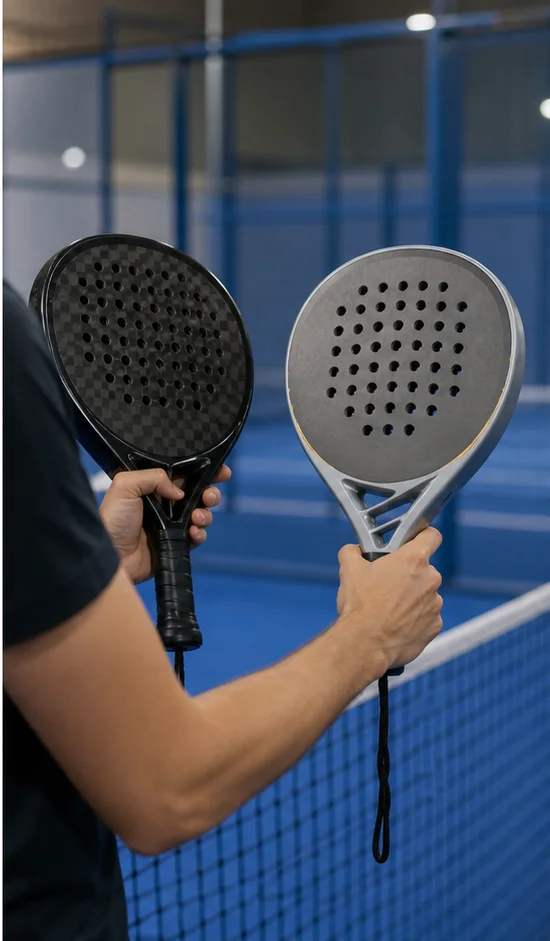
Low balance feels quicker and easier to manoeuvre near the net. Medium balance gives a compromise between handling and reach. High balance can add momentum but often feels slower to reset. A 360 g racket with a low balance can feel easier for some players than a lighter head-heavy racket.
Ask the shop or product page for both the weight range and the balance description. If neither is available, that is a sign to try the racket before purchase or choose a seller with a clear return policy.
Should a beginner choose a soft or hard face?
A softer feel is often more comfortable at low swing speed, while a firmer face can reward cleaner, faster contact.
Brands use different foam names, so do not assume that one material label guarantees the same feel across every maker. A useful first choice is a medium or soft feel, especially if you are still learning to control depth. Then move toward a firmer face only when you know what you are gaining and what you are giving up.
| Your priority | Usually worth testing | Question to ask |
|---|---|---|
| Easy control | Round shape, lower balance, medium/soft feel | Does it stay comfortable after 45-60 minutes? |
| A little more pace | Teardrop shape, medium balance | Can you still volley and defend quickly? |
| Arm comfort | Manageable weight and vibration-damping grip | Does any pain appear after play? |
| Progression | A balanced model rather than an extreme one | Will it still suit you in six months? |
What should you check before buying online?
Check the exact model, weight range, grip size, return policy and local warranty before you pay.
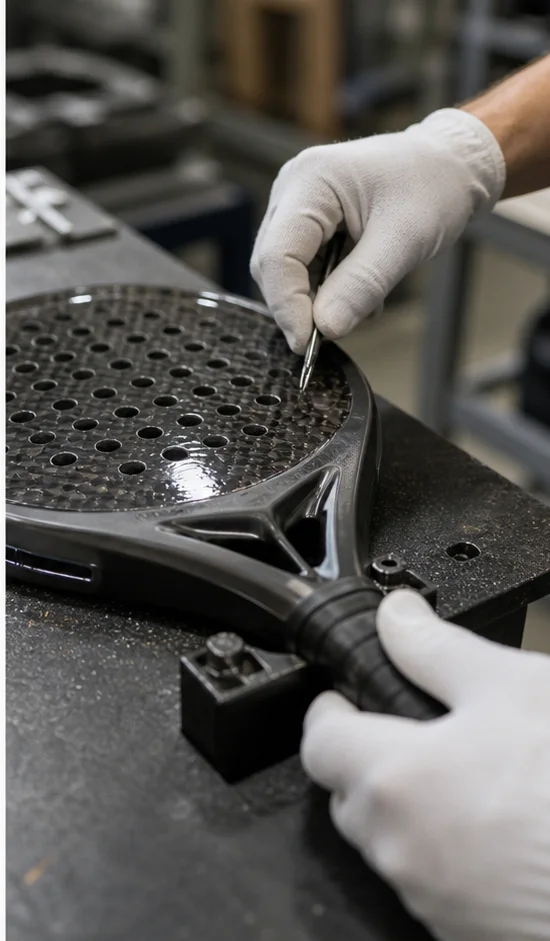
Product photos can make different models look nearly identical. Confirm the printed model name, the weight range offered, whether a cover is included and how the seller handles returns. If you are buying for a club or a retailer, ask for a sample first and record player feedback by shape, balance and feel rather than by colour.
How should a beginner compare product options?
Use the buyer’s question to link into a real product family, not a generic “shop now” button.
A reader who wants a forgiving first racket should land on round beginner padel rackets. A reader who asks about arm comfort should see a comfort and balance guide. A buyer comparing specifications should see a racket-materials article and then an exact product page. Those pages should link back to this guide, so the article, products and technical content form one useful route.
What should a beginner avoid buying from a product photo alone?
Avoid choosing by colour, pro-player association or a single “power” label when the weight and balance are unclear.
Product photography is useful for style, but it does not tell a player how the racket swings. A helpful retail page shows a real weight range, balance description, shape, intended player level, face feel, included accessories and return process. It may also show a short use-case video, but the written specifications must remain visible and searchable.
For clubs or retailers ordering several units, test three simple options rather than buying one extreme model in volume: a round control racket, a balanced teardrop and a more advanced power option. Ask players to record comfort, manoeuvrability, sweet-spot confidence and fatigue after a session. That feedback is better than a sales description copied from a catalogue.
Which product details settle the final buying decision?
Put the playing fit, real specifications, return route and relevant comparison links next to the purchase or enquiry CTA.
For example: “Round shape, low-to-medium balance, 355-365 g range, medium feel; designed for players who want a forgiving first racket.” That is easier to trust than “professional performance.” The product page can then link to the round-shape collection, the balance guide, a care guide and a customer-support page. Each of those paths leads back to the specific model.
FAQ
Is a diamond racket bad for beginners?
No, but it is often less forgiving because the sweet spot and balance can demand cleaner timing. Start with one only if you have tested it and it feels comfortable.
Should I buy the heaviest racket for more power?
No. A racket that tires your arm reduces control and enjoyment. Choose an all-match weight before chasing extra momentum.
Can I use the same racket for six months or longer?
Yes. A balanced, comfortable model can support a beginner for a long time. Upgrade when you can identify a specific need, not because a new graphic appears.
Do the FIP rules choose the right racket for me?
No. The rules set legal dimensions, while shape, balance, feel and comfort decide your best fit. Use the rules as a check, not a buying recommendation.
Start a supplier conversation
Send a short project brief before asking for a final quote.
Include your target market, required specification, quantity and decision timing. It gives every supplier the same facts to answer.
Request a quote
Need supplier quotes you can compare?
Share your target market, quantity and key requirements. A clear brief makes it easier to compare the replies you receive.
Reading: Sporting Goods

Written by
Sofia Martin
Sofia helps sporting-goods teams turn product specifications into clearer comparisons for first-time and repeat buyers.
Reviewed and updated 2026-07-16