The International Energy Agency reports that global battery storage added 108 GW of new capacity in 2025. It also reports that lithium iron phosphate batteries accounted for roughly 90% of battery deployments, while systems of four hours or longer are becoming more common. Those are big signals, but they are not a replacement for a project-specific design.
Is LFP still the main chemistry for stationary storage?
LFP is the dominant chemistry in many stationary-storage deployments, but the right chemistry depends on the project’s energy density, safety and performance needs.
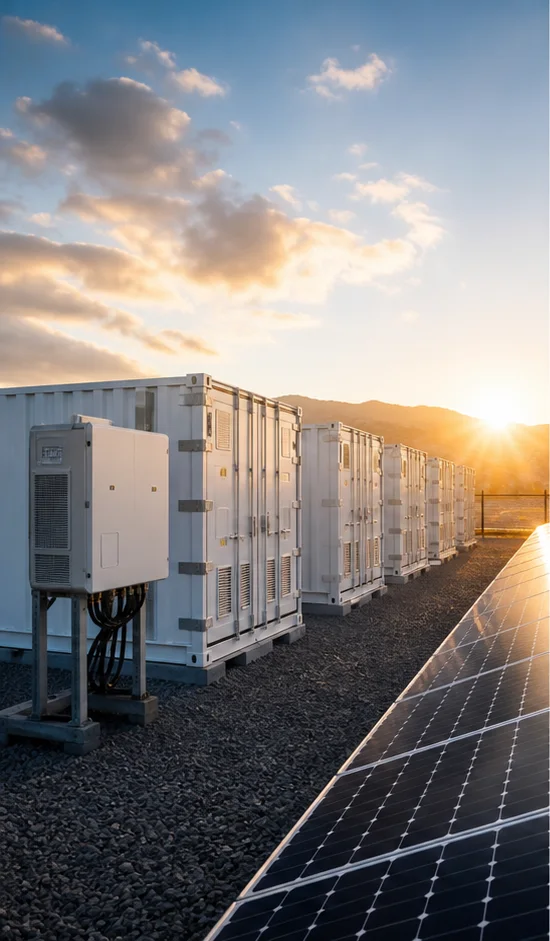
IEA’s 2026 review says LFP represented around 90% of battery deployments. It is an important market signal, not a universal rule. A buyer should compare usable energy, temperature range, charge/discharge profile, fire-safety design, warranty curve and service plan for the exact system.
Why are longer-duration systems getting more attention?
Four-hour-plus systems are appearing more often because many grids need energy later than solar production peaks.
The duration question is commercial as well as technical. A system can be oversized for a short peak or undersized for a long evening load. Define the load profile, required reserve, tariff or market rule, expected cycling and degradation allowance before selecting battery capacity.
| Design question | Data to request | What it prevents |
|---|---|---|
| How long must the system run? | Load profile and usable kWh target | Choosing a headline capacity that does not meet the load |
| How fast must it respond? | kW output, inverter limits and control mode | A battery that has energy but lacks power |
| What happens after years of use? | Warranty retention curve and operating assumptions | Comparing nominal kWh instead of usable lifetime value |
| What documents are needed? | Destination-specific certificate and transport list | Late compliance surprises |
Why do controls matter more than a data-sheet headline?
The system controller decides when stored energy is charged, held, dispatched or protected.

Buyers should ask whether the product supports the intended site mode: self-consumption, peak shaving, backup, time-of-use arbitrage, generator support or grid-service participation. The answer needs a site diagram, not a vague “smart energy management” phrase. Confirm metering location, inverter limits, communication interfaces, remote access permissions and fallback behaviour.
What does faster market growth change for sourcing?
Faster demand increases the value of traceability, realistic lead times and an evidence pack that matches the exact configuration.
IEA reports China accounted for about 60% of new global battery-storage capacity additions in 2025. That scale creates choice, but it also means a buyer must distinguish a cell supplier, a pack assembler, an inverter maker and a system integrator. Ask who owns design responsibility, who provides field service and whose name appears on the technical documents.
Which documents should be ready before procurement?
Ask for model-specific technical, safety, transport and warranty documents before you approve a supplier.
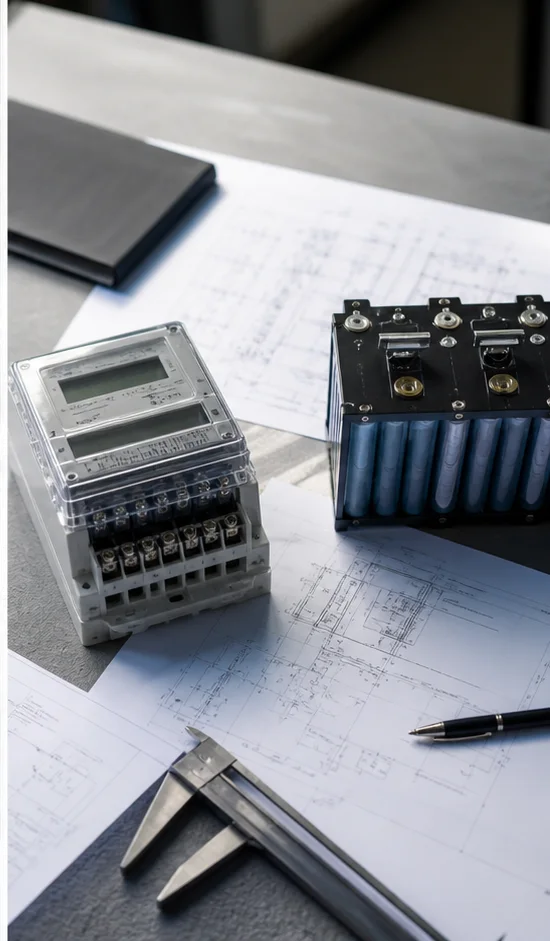
The required set varies by market, but a serious project normally needs a data sheet, system drawing, installation manual, commissioning procedure, warranty terms, test evidence and a transport route where batteries are included. Link this article to energy-storage product configurations, battery transport information, BMS and protection guidance and a project enquiry form. Those pages should link back to this trend piece when a buyer needs the broader context.
How should buyers compare two storage offers?
Compare usable energy, output power, operating assumptions and service responsibility on one sheet before comparing price.
Build one table with the same rows for every offer. Include nominal kWh, usable kWh, AC output kW, PCS or inverter model, warranty retention curve, ambient-temperature window, enclosure rating, fire-safety design, communication interfaces, transport documents, lead time, commissioning scope and the named party responsible for field support. The exercise is deliberately plain: it prevents a 100 kWh nameplate number from being compared with a 100 kWh usable-energy number as though they were identical.
Ask the supplier to annotate the table rather than send a broad slide deck. A clear “not included” is better than a blank. If backup is the use case, request the switch-over behaviour and the loads that are actually supported. If peak shaving is the use case, request the power limit, metering position and control logic. If the system will operate with solar, identify who owns the interface between PV inverter, battery inverter and site controller.
This is also where honest content becomes useful to buyers. A trend article should link to a storage-system comparison worksheet, a commissioning checklist and a service-and-warranty page. The product pages should send buyers back to this article when they are weighing the market context rather than a single SKU.
How often should storage buyers refresh market assumptions?
Date every market claim, show the source and update the page when the underlying report changes.
“2026 trends” is not evergreen copy. It needs an update date, a named author and a source record that a reader can open. Use a short change log for material revisions: for example, “15 July 2026: updated IEA deployment figures and added longer-duration note.” Do not silently change a numerical claim after a buyer has quoted it.
What should the first project brief contain?
Give every potential supplier the same load, location, operating and commercial inputs before asking for a system proposal.
State the site country, grid connection, critical and non-critical loads, peak kW, daily kWh, required backup hours, solar connection if any, installation environment, target commissioning date and required documents. Then ask the supplier to identify what they assumed. This keeps a storage trend from becoming detached market commentary: the reader can move directly from the wider market to a brief that an engineering team can evaluate.
Keep the first brief to one page. A supplier that needs more detail can ask targeted questions; a supplier that replies with only generic capacity claims has not yet shown project understanding.
Record the assumptions in the meeting notes, because an unrecorded assumption often reappears later as an unexpected cost or delivery dispute.
Include a named owner for electrical design, battery integration, civil works, fire-safety coordination, commissioning and after-sales support. A system becomes difficult to deliver when those responsibilities are left inside a generic supplier promise.
FAQ
Does 108 GW of additions mean every project should buy batteries now?
No. It means the market is growing; your project still needs a load, tariff, grid and safety case. Demand growth does not replace a site study.
Is LFP always safer than every alternative?
Chemistry is one part of system safety; enclosure, thermal design, protection, installation and operation also matter. Compare the actual system design.
Is a four-hour system always better?
No. Duration must match the load and commercial objective. More hours can add cost without adding useful value.
What should I ask in the first supplier meeting?
Ask for the exact system boundary, usable kWh, kW output, warranty curve, control modes, documents and service responsibility. That reveals whether the offer fits the project.
Start a supplier conversation
Send a short project brief before asking for a final quote.
Include your target market, required specification, quantity and decision timing. It gives every supplier the same facts to answer.
Request a quote
Need supplier quotes you can compare?
Share your target market, quantity and key requirements. A clear brief makes it easier to compare the replies you receive.
Reading: Energy Storage

Written by
Leah Wong
Leah maps battery specifications, warranty conditions and document requirements into practical buying checklists for installer and distributor teams.
Reviewed and updated 2026-07-16
Keep researching
Related buyer guides
Energy Storage
LiFePO4 vs NMC Home Batteries: Which Chemistry Fits Your Storage Project?
For daily solar storage, LiFePO4 is usually the safer long-life choice; choose NMC when space and energy density matter more than cycle-heavy use.
Read guide →
Energy Storage
Why Do Lithium Batteries Swell? Safe Next Steps and Prevention
A swollen lithium battery is a warning sign: stop using it, do not charge it and follow the manufacturer’s or local authority’s disposal guidance.
Read guide →Energy Storage
kW to kWh Calculator: Formula, Examples and a Useful Battery Sizing Check
kW measures power, kWh measures energy, and the basic calculation is kWh = kW × hours.
Read guide →