Buyers searching “mini excavator price” want a number quickly. Give them one, then explain its limits. The same operating-weight class can be priced very differently because the engine, hydraulic configuration, cab, attachments, emissions route, documents, export packing and warranty scope are not identical.
The public listings below were checked on 15 July 2026. They show why a price guide must name the model condition and purchase quantity beside every number.
What are current visible price reference points?
Public China listings for small excavators span widely, so use the range to start a quote brief rather than to approve a purchase.
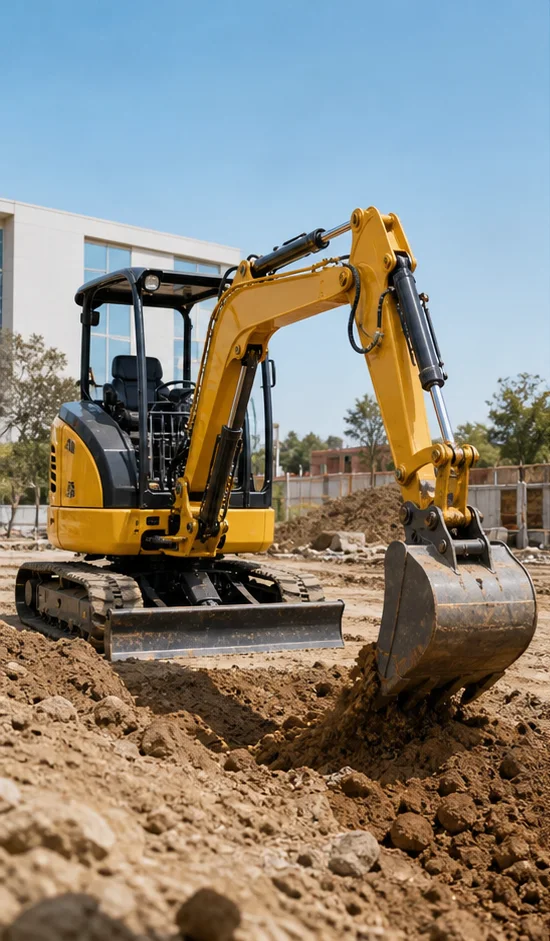
| Public listing reference | Quantity shown | Price shown | What the figure does not confirm |
|---|---|---|---|
| 0.8-1.0 t crawler excavator listing | 1-5 sets | US$1,500 | Engine, attachments, freight and destination approval |
| 0.8-1.0 t excavator listing | 1-4 pieces | US$6,950 | Exact cab, controls, packing and destination documents |
| 1.8 t excavator with Kubota engine listing | 1-2 pieces | US$5,956 | Final engine configuration, options and shipment cost |
| 1.8 t excavator listing | 1-19 pieces | US$4,880 | Inspection scope, export packing and spare parts |
The source pages are 0.8-1.0 t listing at US$1,500, 0.8-1.0 t listing at US$6,950, 1.8 t listing at US$5,956 and 1.8 t listing at US$4,880. These are examples of advertised price, not a claim that products are comparable or available at those prices today.
Why can two machines with the same weight differ by thousands of dollars?
Weight class is only one cost driver; engine, hydraulics, cab, attachments and compliance can change the machine.
Start with the intended work. A 0.8 t machine used for light garden work may not need the same engine, hydraulic flow, track width, boom configuration or canopy as a 1.8 t machine that will run an auger, breaker or enclosed-cab job. The table below helps a buyer turn a loose price request into a comparable specification.
| Cost driver | Question to ask | What changes when the answer changes |
|---|---|---|
| Operating weight | Is the target 0.8 t, 1.8 t or another class? | Transport, digging reach, stability and base machine cost |
| Engine route | Is a named engine or an emissions package required? | Engine cost, documents and service path |
| Attachments | Which bucket, breaker, auger, quick hitch or thumb is included? | Hydraulic circuit, coupler and delivered package price |
| Cab | Open canopy or enclosed cab? | Operator comfort, climate equipment and freight dimensions |
| Compliance | Which destination and machine rules apply? | Document pack, testing and component choice |
| Packing and shipment | CKD, fixed frame, container loading or local delivery? | Damage risk, loading plan and freight cost |
Which costs sit outside the machine price?
Freight, insurance, import duties, inspection, local preparation and spare parts can all sit outside a visible product price.
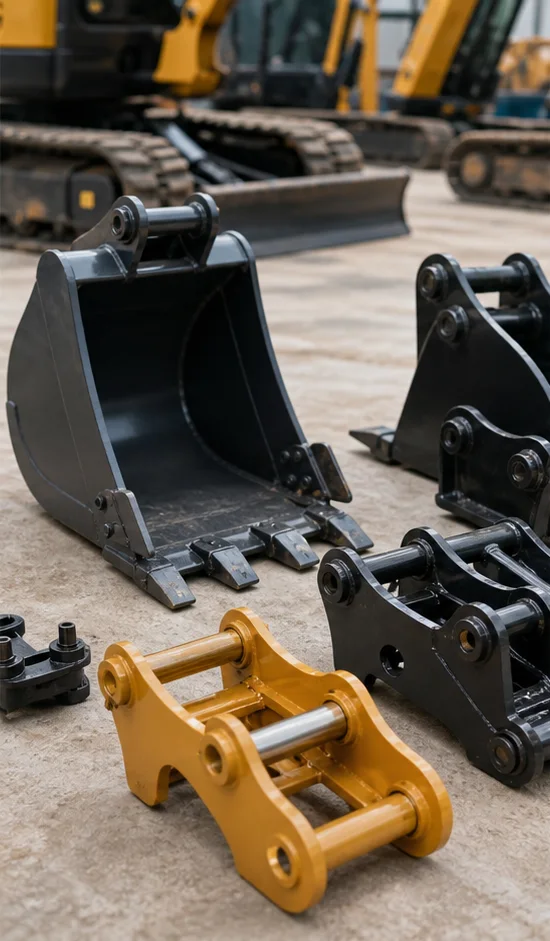
When you compare two suppliers, put every cost on one sheet. State the currency, Incoterm, port, container assumption and validity date. Ask whether the quote includes attachments, export frame, manuals, tool kit, spare filters and a first service kit. A cheap FOB number can be more expensive once the missing items are added.
How should you ask for an apples-to-apples quote?
Send the same eight-point brief to every supplier and reject quotes that leave key fields blank.
- Operating weight and target use.
- Engine preference and destination country.
- Digging depth, bucket size and required attachments.
- Cab or canopy requirement.
- Quantity, sample plan and target order date.
- Port or delivery location and requested Incoterm.
- Required documents, manuals and labels.
- Warranty, spare-parts list and response process.
Ask each supplier to return a model code and a line-by-line option list. “Mini excavator, good quality, best price” is not a quote request; it is an invitation to compare different machines under the same headline.
What should a buyer check before paying a deposit?
Check the exact machine, the evidence pack and the commercial scope before the deposit triggers production.
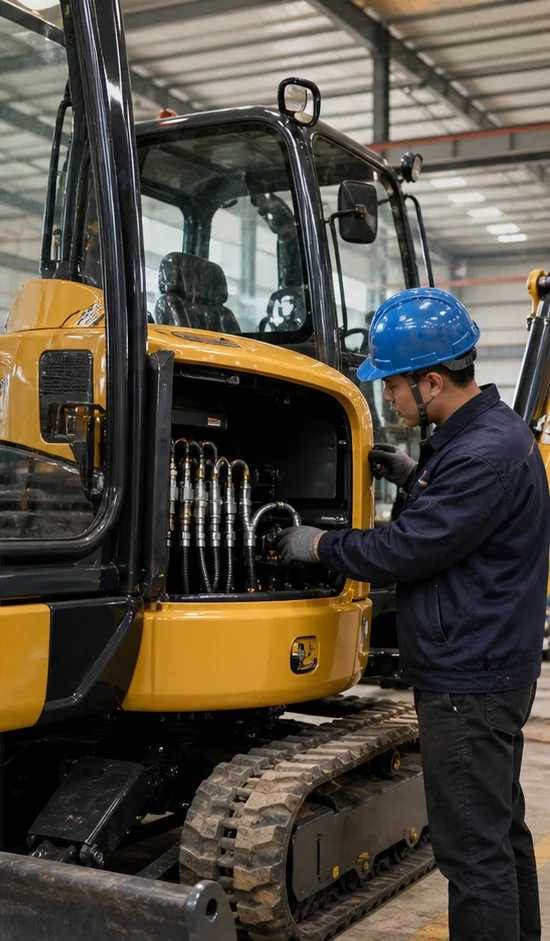
Ask for a dated pro forma invoice, model drawing, configuration list, engine identification, product photos or video, payment terms, production lead time and inspection plan. For a higher-value order, agree on what will be checked before balance payment: serial plate, operating functions, attachments, paint, packing, manuals and the final document set.
How should you use a price guide without turning it into a promise?
Show public listing references as dated examples and put the exact configuration beside every commercial figure.
Price content attracts traffic because it gives a buyer a starting point. It loses trust when it quietly turns an old display price into a promised FOB quote. The safer writing pattern is simple: name the source, name the purchase quantity, state the date checked, explain what is unknown and invite the reader to request the same configuration from several suppliers.
For example, a visible 0.8 t listing does not tell a reader whether the offer contains the same engine, track type, quick hitch, canopy, attachment package, export frame or destination documents as another listing. The price is a signal for research, not a machine specification. That distinction belongs in the first screen, the comparison table and the FAQ.
This article can also link to a quotation checklist, a configuration comparison table and a container-loading case study. Those pages bring a price-search visitor into a real decision path rather than leaving them with a number alone.
Keep the listing date beside every price reference; a number without a date becomes a promise by accident.
FAQ
Is the lowest listing price the factory price?
Not necessarily. A public listing may use a base configuration, a quantity break, a limited option set or a promotional display price. Ask for the exact model and the quote validity date.
Does a higher tonnage always mean a higher final price?
Usually the base machine changes with size, but final cost also depends on engine, cab, hydraulic options and attachments. Compare the completed specification, not the title.
Should freight be included in the product price?
Keep product price and freight visible as separate lines until you agree the Incoterm and loading plan. That makes supplier comparisons much clearer.
What is the most useful first step?
Write a one-page requirement sheet before requesting quotes. A clear brief saves more money than chasing the lowest first number.
Start a supplier conversation
Send a short project brief before asking for a final quote.
Include your target market, required specification, quantity and decision timing. It gives every supplier the same facts to answer.
Request a quote
Need supplier quotes you can compare?
Share your target market, quantity and key requirements. A clear brief makes it easier to compare the replies you receive.
Reading: Industrial Equipment

Written by
Daniel Xu
Daniel writes supplier-comparison guides for industrial buyers, with a focus on quote scope, inspection evidence and delivery readiness.
Reviewed and updated 2026-07-16
Keep researching
Related buyer guides
Industrial Components
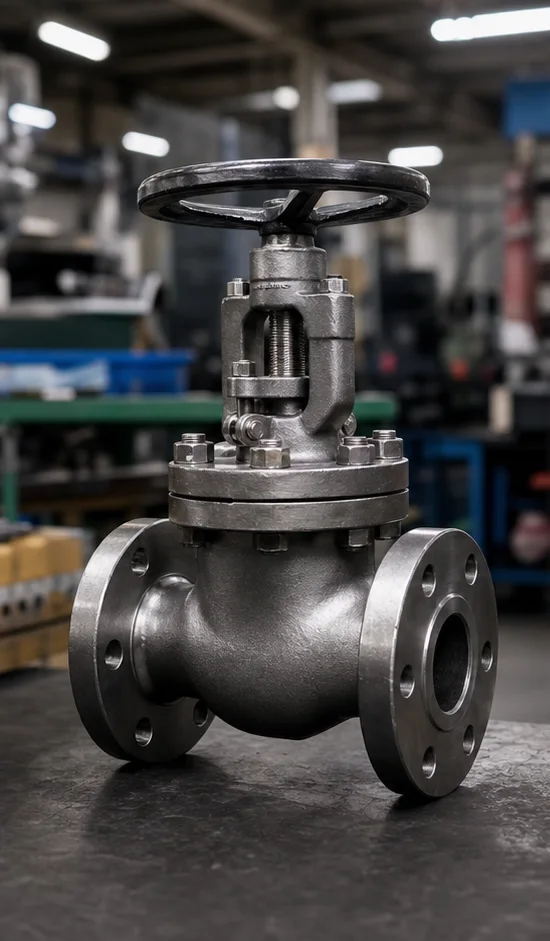
What Is a Globe Valve? Working Principle, Types and Selection Guide
A globe valve is a linear-motion valve used to stop, start or throttle flow when control accuracy matters more than the lowest pressure drop.
Read guide →